
Standing water can follow a restricted filter or hose, but the pump, sensing, plumbing connection, wiring, and controls may also be responsible.
This guide explains the most useful evidence behind dishwasher not draining, safe checks that do not require dismantling, and the point at which professional diagnosis is the sensible next step. The symptom alone cannot confirm a failed part, so use the sections below to prepare for repair rather than to order components by guesswork.
If the dishwasher is smoking, sparking, overheating, leaking onto electrical parts, producing a burning smell, or otherwise creating an immediate hazard, stop using it. When dishwasher not draining creates an immediate risk, disconnect power or isolate water only when the correct control is dry, accessible, and safe; otherwise keep away and arrange qualified help.
What dishwasher not draining can tell you
The timing, location, and conditions around dishwasher not draining are often more valuable than a general statement that the appliance is broken. Note whether the problem is constant or intermittent, what happened immediately before it, and whether another function still works normally. Record exact error codes before resetting the dishwasher.
For dishwasher not draining, note whether it occurs while filling, spraying, heating, draining, or drying. Loading, detergent, the sink waste connection, and visible standing water can help separate an operating issue from a pump, heater, sensor, plumbing, or control fault.
Common reasons for dishwasher not draining
The following causes of dishwasher not draining are arranged as diagnostic possibilities, not a remote verdict. Several can exist together, and the order of likelihood changes with the model, age, installation, and exact behaviour of the dishwasher.
User-accessible filter
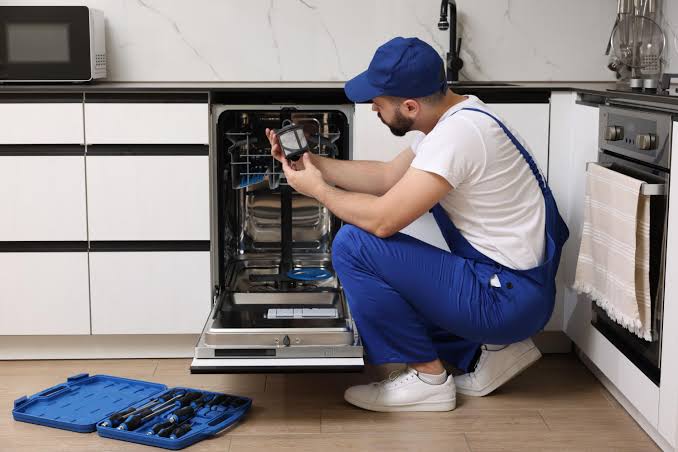
Some models provide a filter that owners may clean; others do not. Follow the manual, disconnect power, expect retained water, and stop if fixed panels are involved. In a case reported as dishwasher not draining, a technician compares this possibility with the other functions that still operate before recommending work.
Drain hose
A kink, poor routing, blockage, or restricted waste connection can slow or stop draining. The visible hose can be checked without pulling out a heavy or built-in appliance. In a case reported as dishwasher not draining, a technician compares this possibility with the other functions that still operate before recommending work.
Waste connection
A blocked sink trap, disposal connection, or incorrectly configured hose can prevent dishwasher drainage. Plumbing and appliance causes should be separated. In a case reported as dishwasher not draining, a technician compares this possibility with the other functions that still operate before recommending work.
Drain pump
Debris, wear, an electrical fault, or a jammed impeller can prevent the pump from moving water. Humming does not prove that water is actually flowing. In a case reported as dishwasher not draining, a technician compares this possibility with the other functions that still operate before recommending work.
Water-level sensing
The control needs reliable information about remaining water. A pressure path, sensor, wiring, or control problem can prevent the next cycle stage. In a case reported as dishwasher not draining, a technician compares this possibility with the other functions that still operate before recommending work.
Wiring or control
Loose connections, damaged wiring, or an electronic control fault can interrupt an otherwise functional component. Electrical diagnosis should be done with appropriate test equipment. In a case reported as dishwasher not draining, a technician compares this possibility with the other functions that still operate before recommending work.
Safe checks you can make before booking
These checks for dishwasher not draining stay on the user side of the appliance. Stop if a step would require moving a heavy or built-in unit, removing a fixed panel, touching wet electrical parts, working on gas or refrigerant, or reaching near hot or moving components.
- Cancel and drain safely. For dishwasher not draining, use the model’s normal cancel or drain command once. Do not open a filter until power is off and retained water can be contained.
- Clean the user filter. For dishwasher not draining, remove and clean the accessible filter as the manual directs. Protect hands from glass and do not reach into hidden pump areas.
- Inspect the visible hose. For dishwasher not draining, look for a kink or crushing without pulling out a heavy or built-in appliance. Do not disconnect a full hose over electrical fittings.
- Check the sink connection. For dishwasher not draining, if the sink or waste connection is also blocked, plumbing may contribute. Do not pour aggressive drain chemicals into the dishwasher.
- Record the cycle stage. For dishwasher not draining, note whether the fault appears during filling, washing, heating, draining, or spinning and record any code before resetting.
After the safe checks, perform no more than one normal test where the dishwasher is dry, stable, and free of safety warnings. Repeatedly running an abnormal appliance can increase water damage, overheat a component, erase useful evidence, or make dishwasher not draining harder to assess.
What to record for an efficient diagnosis
- The exact model number and appliance type, if the label is safely accessible.
- When dishwasher not draining began and whether it is constant or intermittent.
- The stage, burner, zone, compartment, or location where the symptom appears.
- Any error code, warning light, unusual sound, smell, frost, water, or visible damage.
- Recent cleaning, movement, installation, power interruption, plumbing work, or previous repair.
For dishwasher not draining, a short video can help with intermittent sound or display behaviour when it can be captured from a safe distance. Do not keep the dishwasher running, approach gas, stand in water, or remove a cover to create evidence for a booking message.
When to stop checking and arrange repair
Arrange diagnosis when dishwasher not draining remains after the safe checks, returns repeatedly, prevents normal use, or is accompanied by an error code or abnormal sound. Stop immediately for smoke, sparking, burning odour, electric shock, repeated breaker trips, severe overheating, active water exposure around electricity, or structural movement.
When investigating dishwasher not draining, do not open fixed panels or attempt mains-electrical, sealed-system, refrigerant, pump, motor, or internal wiring work. Those checks need suitable tools and a safe method specific to the dishwasher.
What a technician may inspect
The visit should begin by confirming the reported behaviour and reviewing the model information, error history, installation, and safe checks already completed. For dishwasher not draining, the technician then tests the relevant systems rather than replacing the first component associated with an online symptom.
For dishwasher not draining, the inspection may include accessible supply and drainage paths, seals, sensors, controls, wiring, motors, fans, pumps, heating or cooling components, and safety devices as relevant to the appliance. The exact sequence depends on what operates normally and what fails. Findings, proposed work, expected cost, parts availability, and any follow-up should be explained before repair proceeds.
After agreed work for dishwasher not draining, the original complaint should be checked under suitable conditions. Some results need time: refrigerator temperatures stabilize gradually, while a washer or dishwasher may need the relevant cycle stage. If complete verification is not possible during the visit, ask what to monitor and when to report the result.
Repair cost, parts, and appointment timing
There is no responsible fixed price for dishwasher not draining without knowing the cause, model, access, labour, and required parts. The same outward symptom can range from an operating or installation issue to a failed internal system. A model-label photo helps identify the appliance but does not prove which component is faulty.
For a dishwasher not draining request, part availability varies by model and supplier. Same-day attendance may be possible according to request time, location, route, and technician availability, but attendance and completion are separate. A model-specific part, gas or electrical coordination, or longer functional test may require follow-up.
Repair or replace?
Repairing dishwasher not draining can make sense when the dishwasher is otherwise in good condition, the fault is contained, a suitable part is available, and the expected cost is reasonable. Replacement deserves consideration when there is serious corrosion, structural damage, repeated major failure, unsafe modification, unavailable parts, or repair cost disproportionate to age and likely reliability.
Do not decide from dishwasher not draining alone. Compare the diagnosis, previous repairs, installation changes, energy or water use, capacity needs, safety risk, and the disruption of another failure. A transparent assessment may support repair, monitoring, or replacement depending on the individual appliance.
How to reduce avoidable repeat problems
After dealing with dishwasher not draining, load so spray arms can rotate, scrape large debris, clean user filters, use automatic-dishwasher detergent in the correct amount, and select a program suited to the soil. Check seals for debris and address small leaks or changed sounds before water damage develops.
Maintenance should never require defeating a safety device or working beyond user-accessible parts. If dishwasher not draining returns despite correct use and routine care, further cleaning is not a substitute for diagnosis.
Frequently asked questions about dishwasher not draining
Can I keep using the dishwasher?
Use depends on the exact behaviour. Stop for safety warnings, leakage near electricity, smoke, sparking, burning smell, severe overheating, gas odour, or violent movement. If dishwasher not draining could damage the appliance or property, leave it off until assessed.
Can a reset solve the problem?
One normal reset described in the manual may clear a temporary control state, but repeated resets do not repair a restriction, worn component, leak, unsafe connection, or mechanical fault. Record errors first and stop if dishwasher not draining returns.
Can the faulty part be identified from a photo?
For dishwasher not draining, a photo or video can show a display, leak position, frost pattern, flame, noise timing, or model label, but it rarely confirms an internal component by itself. Inspection and testing are used to separate causes that share the same symptom.
Is same-day repair guaranteed?
No. Same-day attendance for dishwasher not draining may be available depending on request time, Abu Dhabi location, route, access, and the technician required. Completion also depends on diagnosis, parts, safety conditions, and testing. The available appointment is confirmed when you contact us.
What should I send when booking?
Send your area, the appliance type, model number if safely accessible, a concise description of dishwasher not draining, exact error codes, and preferred timing. Mention gas smell, smoke, sparking, leakage, tripping, or overheating first and include building-access details.
Book dishwasher repair in Abu Dhabi
If the safe checks do not resolve dishwasher not draining, visit our dishwasher repair in Abu Dhabi page or call or WhatsApp +971 50 581 8026 between 9:00 am and 8:00 pm UAE time. Send the symptom, appliance type, exact Abu Dhabi location, model details, and any safety concern. You can also review our appliance repair service areas.
Shozi Home Appliance Repairs will confirm whether the dishwasher not draining request is within the four published service categories and offer an available appointment. Diagnosis determines the recommended work, price, parts requirement, and whether repair is practical.