
Stove and Cooktop Repair in Abu Dhabi
Shozi Home Appliance Repairs arranges residential inspection and repair appointments for selected gas and electric stoves, cooktops, and cooking ranges across selected areas of Abu Dhabi.
Request help for burners that will not ignite, ignition systems that keep clicking, weak or uneven flames, electric zones that will not heat, controls that do not respond correctly, repeated tripping, intermittent operation, and other appliance-level operating faults.
Send the appliance type, fuel type, installation type, brand, model number if safely accessible, affected burner or cooking zone, exact symptom, error code if shown, location, access details, and preferred appointment time.
Safety Information First
Diagnosis Before Recommendation
Approval Before Work
Residential Appointments
- SERVICE INTRODUCTION
Safety-Led Stove and Cooktop Diagnosis
Cooking appliances combine high heat with gas or mains electricity, so the visible symptom does not always identify the underlying fault and unsafe guessing should be avoided.
A gas burner that will not ignite may involve removable burner parts that are wet, dirty, damaged, or incorrectly seated, but it can also involve the ignition electrode, ignition module, switch, wiring, appliance controls, valve, or supply condition.
An electric, ceramic, or induction cooking zone that does not heat may involve cookware compatibility, user controls, the heating element or induction system, regulator, sensor, switch, wiring, terminal, control board, or electrical supply.
The technician first identifies the appliance type, installation, fuel or power source, affected burner or zone, and reported symptom. Relevant accessible appliance components may then be inspected where safe and within the verified service scope. Fixed gas supply, building systems, mains circuits, or work requiring separate authorization must be referred to the appropriate qualified party.
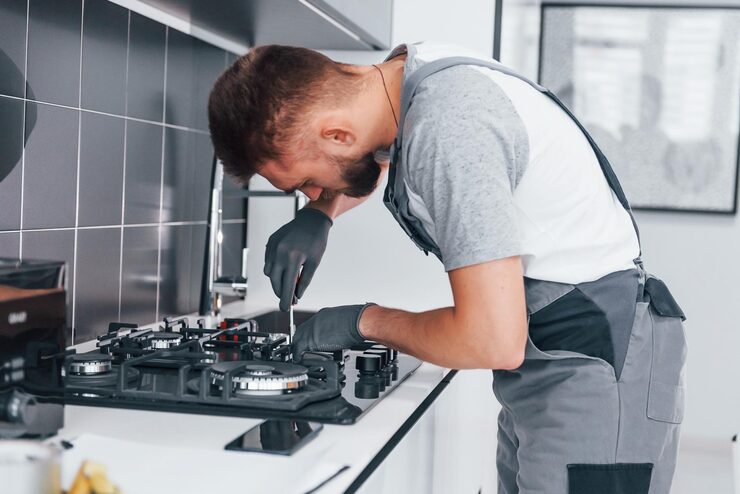
Diagnosis Before Recommendation
The reported symptom is assessed before appliance parts or repair work are recommended because similar faults can have different causes.
Appointment Confirmation
Timing depends on the request time, exact location, appliance information, suitable technician availability, access requirements, and the day’s route.
Parts Depend on the Model
Component availability depends on the diagnosed fault, appliance model, age, supplier stock, and compatibility.
Residential Service Scope
Appointments are arranged for confirmed residential locations and appliance faults that fall within the published service scope.
- COMMON PROBLEMS
Stove and Cooktop Symptoms We Investigate
The same symptom can have more than one cause. These examples help describe the booking request but do not replace an on-site assessment.
Gas Burner Will Not Ignite
Possible causes include wet, dirty, damaged, or incorrectly seated removable burner parts, ignition-electrode trouble, switch or ignition-module faults, wiring, appliance controls, valve concerns, or supply conditions.
Ignition Keeps Clicking
Continuous clicking can follow moisture or residue around removable parts, incorrect burner assembly, a sticking switch, electrode issue, wiring fault, ignition-module problem, or control fault.
Weak or Uneven Flame
When no active gas smell is present, weak or uneven flame may relate to dirty or incorrectly seated removable burner parts, damaged burner components, appliance adjustment, valve concerns, or supply conditions requiring separate assessment.
Electric Zone Will Not Heat
A cold electric, ceramic, or induction zone may involve cookware compatibility, user settings, a heating or induction component, regulator, switch, sensor, wiring, terminal, control board, or power supply.
Heat Cannot Be Controlled
A zone that overheats, remains on, or does not respond correctly may involve the control, regulator, selector, sensor, relay, wiring, or electronic system. Stop using a zone that will not switch off.
Tripping, Sparking, Smoke, or Burning Smell
Stop using the appliance. These symptoms may indicate an electrical, connection, wiring, control, installation, or component fault and should not be investigated through repeated test cycles.
- SAFE USER CHECKS
Safe Checks Before Booking
Perform only ordinary user checks permitted by the appliance manual. Do not dismantle the appliance or continue if any safety warning is present.
- Confirm whether the appliance is gas, conventional electric, ceramic, or induction.
- Check that the correct user control and cooking zone are selected.
- For induction units, confirm that the cookware is suitable and positioned correctly.
- When the appliance is cool and there is no gas smell, check whether removable burner caps and heads are clean, fully dry, undamaged, and correctly seated according to the manual.
- Remove obvious food residue only from user-removable parts when the appliance is cool and the manual permits cleaning.
- Confirm whether the fault affects one burner or zone or the whole appliance.
- Record any error code and the exact stage when the problem occurs.
- Check whether a normal circuit breaker has tripped only from a safe location. Do not repeatedly reset a breaker that trips again.
- Take a model-label photo only if it is accessible without moving, disconnecting, or dismantling the appliance.
- INSPECTION SCOPE
What the Technician May Check
Inspection depends on the reported symptom, appliance design, accessibility, and safe working conditions.
Appliance Type and Reported Fault
The technician may confirm the fuel or power type, installation style, affected burner or zone, control behaviour, and the exact conditions under which the fault appears.
Removable Burner Components
For gas appliances, user-removable burner caps, heads, visible ports, and their positioning may be assessed when the appliance is cool and no active gas smell is present.
Ignition Components
Where relevant, accessible electrodes, ignition switches, ignition modules, appliance wiring, and related controls may be inspected within the verified service scope.
Electric Heating or Induction System
Heating elements, induction components, regulators, switches, sensors, terminals, controls, and appliance wiring may be evaluated where relevant and safe.
Appliance Controls and Connections
Relevant knobs, selectors, relays, control boards, appliance connections, and visible signs of heat damage may be assessed.
Post-Repair Functional Check
After approved work, the reported symptom and basic appliance operation may be checked where installation, utility supply, ventilation, and safety conditions permit.
- SAFETY GUIDANCE
What to Do When a Stove or Cooktop Is Unsafe
If you smell gas, do not light a flame, operate electrical switches near the suspected source, or continue trying to ignite the appliance. Move away and follow the property, building, utility, or emergency gas procedure from a safe location. Do not wait for a routine appliance-repair reply.
If there is fire or smoke, move to safety and use the appropriate emergency procedure. Do not attempt an appliance test.
For an electric stove or cooktop, stop use if there is sparking, electric shock, a burning smell, damaged wiring, repeated tripping, overheating, or a zone that will not switch off. Isolate power only when it can be done safely and the correct circuit is known.
When no safety warning is present, the appliance is cool, and the manual permits it, user-removable burner caps or heads may be checked for correct positioning, cleanliness, and dryness. Do not remove fixed panels, alter gas components, bypass safety devices, or work on mains wiring.
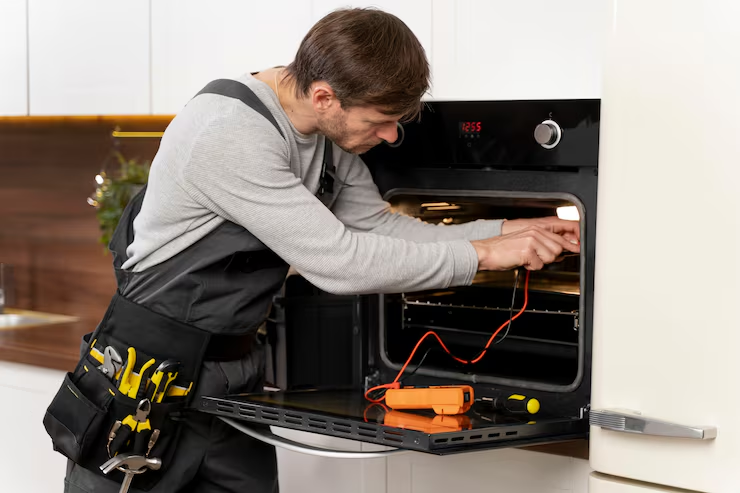
- REPAIR OR REPLACE
Repair or Replace the Stove or Cooktop?
Repair may be worth considering when the cooking surface, casing, installation, and main structure remain in reasonable condition and the fault is limited to an identifiable appliance component with suitable parts available.
Replacement may be more practical when there is severe corrosion, cracked structural glass, significant heat damage, unsafe modification, repeated major control failure, unavailable components, or a repair cost that is high compared with the appliance’s age and condition.
Installation compatibility, fuel or power type, ventilation, replacement dimensions, previous repair history, and whether external gas or electrical work is required may also affect the decision. The inspection findings, proposed appliance work, expected cost, parts situation, and any work outside Shozi’s scope should be explained before the customer decides.
- WHY CHOOSE SHOZI
A Clear Process Before Appliance Work Begins
Clear information and approval support an informed appliance-repair decision.
Safety Information Collected First
The booking request asks about gas smell, smoke, sparking, tripping, shock risk, and uncontrolled heating before routine scheduling.
Inspection Before Recommendation
The reported appliance symptom is assessed before a repair or component is recommended.
Approval Before Work
The likely appliance fault, proposed work, expected cost, parts situation, and any service-scope limitation are explained before approved work begins.
Residential Appointment Service
Visits are arranged for confirmed residential locations and requests that fall within the published service scope.
- OUR PROCESS
How Stove and Cooktop Repair Appointments Work
One clear four-step process takes the request from booking to approved work and a conditional functional check.
1. Send the Appliance Details
Share the appliance type, fuel or power type, installation style, brand, model, affected burner or zone, exact symptom, safety warnings, location, access information, and preferred appointment time.
2. Confirm Scope and Timing
The request is reviewed against the published service scope, exact location, appliance information, access requirements, suitable technician availability, and route.
3. Inspect and Explain the Findings
The technician assesses the reported appliance fault where safe and explains the likely cause, proposed appliance work, expected cost, parts situation, and any issue requiring a separate authorized provider.
4. Complete and Check Approved Work
After approval, the agreed appliance work is completed and the reported symptom and basic functions are checked where installation, utility supply, ventilation, and safety conditions permit.
- LOCATIONS
Stove and Cooktop Service Areas
Residential stove and cooktop appointments are arranged across selected areas of Abu Dhabi, subject to the exact location, appliance type, verified service scope, access requirements, suitable technician availability, and the day’s route.
Tell us whether the appliance is gas, electric, ceramic, or induction; whether it is freestanding or built in; and whether building access or coordination with facilities management may be required.
- BOOK A REPAIR VISIT
Request Stove or Cooktop Repair in Abu Dhabi
Call or WhatsApp +971 50 581 8026 between 9:00 AM and 8:00 PM UAE time.
Send your area, exact location, appliance type, fuel or power type, installation style, brand, model number if safely accessible, affected burner or cooking zone, reported symptom, safety warnings, building-access details, and preferred appointment time.
- FAQ
Frequently Asked Questions About Stove and Cooktop Repair
Read the focused guides for a gas stove not igniting, an electric stove not heating, a weak gas burner flame, or stove ignition that keeps clicking.
Why is my gas burner clicking but not lighting?
When there is no gas smell and the appliance is cool, check whether the removable burner cap and head are clean, fully dry, undamaged, and correctly seated according to the manual. Persistent clicking without ignition may involve the electrode, ignition module, switch, wiring, appliance control, valve, or supply condition and needs assessment.
What should I do if I smell gas near the stove?
Do not use flames or operate electrical switches near the suspected source. Stop trying to ignite the appliance, move away, and follow the property, building, utility, or emergency gas procedure from a safe location. Do not wait for a routine appliance-repair reply.
Why is an electric, ceramic, or induction zone not heating?
Possible causes include cookware compatibility, user settings, the heating or induction component, regulator, switch, sensor, wiring, terminal, control board, or power supply. Stop using the appliance for sparking, electric shock, burning smell, repeated tripping, damaged wiring, or a zone that will not switch off.
Why does the stove ignition keep clicking?
Continuous clicking can follow moisture, residue, incorrectly seated removable burner parts, a sticking switch, electrode fault, wiring issue, ignition-module problem, or control fault. Stop troubleshooting if a gas smell is present.
Why is the gas flame weak or uneven?
When there is no active gas smell, let the appliance cool and check only user-removable burner parts permitted by the manual. Weak or uneven flame may relate to dirty, wet, damaged, or incorrectly seated components, an appliance fault, valve concern, or supply condition requiring separate assessment.
How much does stove or cooktop repair cost?
Pricing depends on the appliance design, reported fault, diagnosis, accessibility, labour, required components, and whether any work falls outside the appliance-repair scope. The proposed appliance work and expected cost should be explained before approved work begins.
Is same-day stove attendance available?
Same-day attendance may be possible when the request time, exact location, appliance information, suitable technician availability, access requirements, and route align. It is confirmed at booking and is not guaranteed.
Are stove and cooktop parts always available?
Component availability varies by appliance model, age, supplier, and compatibility. A model-label photo may help when it can be captured without moving or dismantling the appliance, but the required component still depends on diagnosis. A follow-up visit may be required.
How should I prepare for a stove repair visit?
Clear loose cookware and provide safe access, but do not disconnect gas, remove fixed panels, pull out a built-in appliance, or work on wiring. Share whether the appliance is gas, electric, ceramic, or induction, whether it is built in, and any building-access information.
Should I repair or replace my stove or cooktop?
Repair may be reasonable for a structurally sound appliance with a contained fault and suitable components available. Replacement may be more practical when there is severe corrosion, cracked structural glass, significant heat damage, unsafe modification, repeated major failure, unavailable parts, or a repair cost that is high compared with age and condition.
- OTHER REPAIR SERVICES
Other Home Appliance Repair Services
We also repair washing machines, refrigerators and freezers, and dishwashers. Visit home appliance repair services for the full booking overview.
Washing Machine Repair
Help with washers that will not start, fill, drain, spin, unlock, or complete a cycle, as well as leaks, shaking, noise, and error codes.
Refrigerator and Freezer Repair
Inspection and repair guidance for poor cooling, unwanted freezing, frost buildup, leakage, unusual noise, cycling concerns, and door-seal faults.
Dishwasher Repair
Help with standing water, poor cleaning, leaks, no-start faults, incomplete programs, unusual noise, and recurring error codes.